Biography
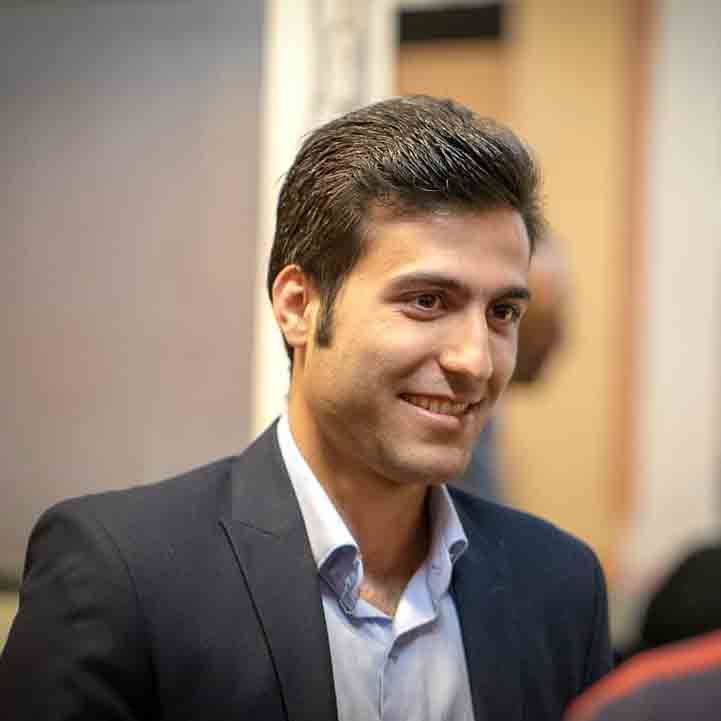
Mohammad Bayat is the founder of K2Quant, Vocora, and Photora, a software engineer, and a systems builder. His work has developed at the intersection of building technical systems and understanding how people learn, coordinate, and change.
He began working in software in the early 2010s, moving across front-end and back-end development, real-time market applications, testing, data visualization, infrastructure, and quantitative trading systems. That work led him to found and build K2Quant, where he continues to develop quantitative software, artificial-intelligence tools, and the technical and operating systems behind the organization.
In July 2026, he founded Vocora, a language-learning startup focused on English learning and IELTS preparation. He leads its product direction, software development, and learning-experience design. What began as a vocabulary-practice application has developed into a broader self-study product and a business alongside K2Quant.
In September 2026, he founded Photora, an AI-assisted product-photography startup. He leads its product direction and software development, building a workflow that turns ordinary product photos into advertising and social-media images while keeping each product’s visual identity central to the output.
Building K2Quant also changed the questions at the center of his work. As the company grew, problems of communication, responsibility, decision-making, and coordination became as important as problems of code and reliability. His experience has since included company-building, team leadership, organizational work, and the long-running FamilyLink social-impact initiative.
Since approximately 2017–2018, he has studied and practiced leadership, coaching, facilitation, and group learning. He currently works as a Leadership Facilitator at Gruccia. He has worked with individuals, teams, managers, and large facilitated groups while developing projects such as Learning Circle and Mastery for Life. Across these settings, he became increasingly interested in the difference between a powerful experience inside a supportive environment and a change that remains available after that environment is gone.
This is now the central question of his Human Transformation inquiry: What happens to reflective practice, learning, and new ways of acting when people return to organizations or relationships that do not reinforce them? He is particularly interested in how learning persists, adapts, erodes, or can be reactivated across changing contexts.
His inquiry is independent and practice-based, connecting careful reading with field observation, facilitation, and organizational work. It also informs product decisions without defining the identity of his businesses. OkBayat.com is the public record of that continuing work: what he is building, asking, observing, and revising.